Knowing which statutory policies for schools you are legally required to hold is one of the most common compliance headaches for headteachers, business managers and clerks — and one of the first things Ofsted will check. Miss a required policy, let one fall out of date, or fail to publish it where the law says you must, and you create a compliance gap that is entirely avoidable. This 2026 guide explains exactly what statutory policies and documents your school must have, how often each needs reviewing, what you are required to publish online, and where the official list now lives following a major change in 2024.
A statutory policy is one that a school is legally required to have in place. The requirement comes from primary legislation (such as the Education Act 2002 or the Equality Act 2010), from regulations, or from statutory guidance like Keeping Children Safe in Education (KCSIE). Alongside these sit statutory documents — items a school must produce, keep current or publish, such as the register of business interests or the information required on a school website. Together, these statutory policies for schools form the compliance backbone that every setting is judged against.
Two points are worth understanding from the outset. First, schools are not always required to hold a separate document for every requirement — several can be met collectively within one policy unless the guidance states otherwise. Second, while academies and free schools have greater freedoms than local-authority-maintained schools, most statutory requirements apply to them through their funding agreements, so the practical list is very similar. Getting the statutory policies for schools right is therefore a baseline expectation regardless of school type.
Where the statutory policies for schools list now lives (the 2024 change)
This is where many schools — and many out-of-date blogs — go wrong. For years the reference point was the DfE's standalone publication, Statutory Policies for Schools and Academy Trusts. That page was withdrawn in March 2024. The statutory policy list was folded into two new governance guides, which are now the canonical source:
These were updated on 25 June 2025 and reformatted on 19 November 2025. A practical detail from the change: certain "live" documents — the pupil register, the register of interests, the information required on your website and the Single Central Record — were removed from the formal policy list, but the duty to keep them accurate and up to date remains every bit as binding — so they belong in the same compliance routine as your statutory policies for schools. We come back to that point below, because it is exactly where compliance tends to slip.
The statutory policies for schools you must have
The list below groups the core statutory policies for schools by theme. It reflects the requirements in the current governance guides. It is not an exhaustive list — specialist settings (alternative provision, special schools, sixth forms) and multi-academy trusts carry additional requirements — but it covers the policies that apply to almost every school.
Safeguarding and pupil welfare
Safeguarding and child protection — required under KCSIE; must be reviewed annually and published on the school website.
Behaviour policy and written statement of behaviour principles — required under the Education and Inspections Act 2006, covering sanctions, rewards and anti-bullying measures.
Supporting pupils with medical conditions — setting out how the school meets pupils' medical needs.
Relationships and sex education (RSE) and health education — required for all state-funded schools.
School attendance — in line with the statutory guidance on improving attendance.
Suspensions and permanent exclusions — following the statutory exclusions guidance.
Staff and employment
Staff code of conduct (staff behaviour policy) — expected via KCSIE.
Staff discipline, conduct and grievance procedures — including a procedure for dealing with allegations against staff.
Pay policy — maintained schools must have one in line with the School Teachers' Pay and Conditions Document; reviewed annually.
Equality, inclusion and data
Equality information and objectives — under the Equality Act 2010 public sector equality duty; objectives must be published at least every four years.
Accessibility plan — showing how disabled pupils' access to the curriculum will increase over time.
Special educational needs and disability (SEND) — policy and information report, in line with the SEND code of practice.
Data protection — with privacy notices for staff, pupils and parents; schools must also register with the ICO and meet UK GDPR requirements.
Protection of biometric information of children — a more recent addition where biometric systems are used.
Finance, premises and governance
Charging and remissions — setting out charges for activities and any waivers.
Complaints procedure — required under section 29 of the Education Act 2002 (and via funding agreement for academies).
Health and safety — in line with health and safety advice for schools.
Premises management — covering the school estate and statutory premises duties.
Governors' allowances — setting out what governors may claim.
Curriculum and careers
School uniform — an accessible policy in line with the statutory guidance on the cost of school uniforms.
Careers and provider access (secondary) — a policy statement under section 42B of the Education Act 1997.
Statutory documents you must publish online
Holding your statutory policies for schools is only half the duty — a defined set of documents must also be published on your school website. This is governed by separate DfE guidance for maintained schools and for academies and free schools. Inspectors and the DfE check websites directly, and missing items are flagged specifically. The core list includes:
Contact details, including the name of the SENCO
Admission arrangements
Your most recent Ofsted report
Exam and assessment (performance) results
Curriculum information, including a music development plan in primary settings
Behaviour policy, complaints procedure, and charging and remissions policy
SEN information report and accessibility plan
Equality objectives and public sector equality duty information
Pupil premium strategy statement (by 31 December each year) and, in primary schools, the PE and sport premium (by 31 July)
Governance information, including the register of interests
Financial information and a link to the schools financial benchmarking service
Gender pay gap information (schools with 250 or more employees)
School uniform policy and school opening hours
Careers programme information (secondary schools)
If your school does not have its own website, you must still publish this information on an alternative site and give parents a link — and provide a free paper copy on request.
How often must statutory policies for schools be reviewed?
Keeping statutory policies for schools under review is where well-run schools still get caught out. The DfE's position is straightforward: where a specific frequency is not set, governing bodies are strongly advised to review the policy annually. A few key exceptions and confirmations:
Safeguarding / child protection — must be reviewed annually (this is mandatory, not advisory).
Pay policy — reviewed annually.
Equality objectives — reviewed at least every four years (with information published annually).
All other statutory policies for schools — review annually as a minimum, and whenever the law or your circumstances change.
Not all of these statutory policies for schools need full governing body sign-off — the governance guides set out the level of approval required for each, and much can be delegated to a committee, an individual governor or the headteacher. The accountability, however, always sits with the governing body.
'Live' documents: the Single Central Record and beyond
As noted earlier, the 2024 change removed certain documents from the statutory policy list — but only because they are live records that must be kept accurate continuously, rather than reviewed on a fixed cycle. The most important of these is the Single Central Record (SCR), the mandatory log of pre-employment safeguarding checks required under KCSIE.
The SCR pulls together the very checks that underpin safer recruitment — including QTS verification, Section 128 checks, prohibition checks, enhanced DBS with barred list, and right to work. A statutory policy that says all the right things means little if the SCR behind it has gaps. Treating your statutory policies for schools and your live safeguarding records as one connected system — rather than separate jobs — is what keeps a school genuinely inspection-ready.
Common mistakes with statutory policies for schools
Even diligent schools trip up on statutory policies for schools in a handful of predictable ways:
Citing the withdrawn DfE page — working from the old standalone publication rather than the current governance guides.
Out-of-date review dates — a policy that is technically present but was last reviewed three years ago is still a finding.
Held but not published — having a compliant policy that never made it onto the website where the law requires it.
No record of staff acknowledgement — no evidence that staff have actually read key policies such as safeguarding and the code of conduct.
Version confusion — multiple copies of the same policy in different drives, with no single source of truth.
Treating the SCR as separate — managing policies in one place and safeguarding records in another, so gaps in either go unnoticed until inspection.
How OnlineSCR helps you manage statutory policies for schools
OnlineSCR is best known for making the Single Central Record simple, but the same platform includes a dedicated Statutory Policies and Documents area — so your policies and your safeguarding records live in one place, not scattered across shared drives. With OnlineSCR you can store every statutory policy with its review date, get clear visibility of what is due, upload and version documents so there is a single source of truth, and track which staff have read and acknowledged key policies. When an inspector asks, everything is in one screen.
And because OnlineSCR is backed by free telephone support and free ongoing training, you always have a real person to ask — whether the question is about statutory policies for schools, a review cycle, or a missing check on the SCR.
Keep every statutory policy and check in one place
See how OnlineSCR brings your Single Central Record and your statutory policies and documents together — inspection-ready from day one.
This article is intended as general guidance and is correct to the best of our knowledge at the time of writing. Statutory requirements change — always check the current DfE governance guides for your school type before acting. It is not legal advice.
Right to Work checks for schools are a legal requirement for every member of staff — yet they remain one of the most commonly incomplete entries on a school's Single Central Record. Whether you are recruiting a new teacher, hiring a site manager, or taking on a paid worker in any role, you must verify that every individual has the legal right to work in the UK before they begin.
This guide covers exactly what Right to Work checks involve, who they apply to in a school setting, how to carry them out correctly, and how to record the outcome on your SCR in line with Keeping Children Safe in Education 2025.
A Right to Work check is a process by which an employer verifies that a person is legally permitted to work in the United Kingdom. It is separate from a DBS check, a prohibition from teaching check, or any other pre-employment screening — it focuses solely on a person's immigration and citizenship status.
The check was introduced under the Immigration, Asylum and Nationality Act 2006 and is enforced by the Home Office. Employing someone without the right to work in the UK can result in a civil penalty of £45,000 per illegal worker for a first breach and £60,000 per worker for repeat breaches, and in serious cases, criminal prosecution.
For schools, getting this right is not just a compliance matter — it forms part of your safer recruitment obligations and must be recorded on your Single Central Record.
Is a Right to Work check a legal requirement for schools?
Yes. Right to Work checks for schools are a statutory requirement for all employers in the UK, including maintained schools, academies, free schools, independent schools, and multi-academy trusts.
Under KCSIE 2025, schools must also record evidence that a Right to Work check has been carried out on the Single Central Record for all members of staff who work in a school environment. This applies regardless of role, seniority, or contract type.
Failing to carry out and record a Right to Work check leaves your school exposed in two ways: to a Home Office civil penalty, and to a safeguarding inspection failure if the gap is identified during an Ofsted or ISI inspection.
Right to Work checks for schools apply to all employees. Unlike some checks on the Single Central Record that vary by role — such as QTS verification for teachers or Section 128 checks for governors — Right to Work applies to everyone who is employed by the school.
This includes:
Teachers — qualified, unqualified, and trainee teachers in salaried roles
Teaching assistants and support staff — including learning support assistants, HLTAs, and specialist support roles
Administrative and office staff
Site and caretaking staff
Catering staff employed directly by the school
Senior leaders and headteachers
Part-time and fixed-term contract staff
What about supply and agency staff?
For supply staff provided through a recruitment agency, the responsibility for carrying out the Right to Work check sits with the agency, not the school. However, schools should obtain written confirmation from the agency that the check has been carried out before the individual begins working on site. This confirmation must also be recorded on your SCR.
What about governors?
Governors and trustees are volunteers rather than employees, so the Right to Work requirements under the Immigration Acts do not strictly apply. However, if a governor or trustee is also a paid employee of the school or trust, the check must be carried out and recorded in their capacity as an employee.
There are two main methods for carrying out a Right to Work check: a manual document check, or an online check via the Home Office checking service. The method you use will depend on the individual's nationality and the documents they are able to provide.
Manual document checks
For British and Irish nationals, and for those with indefinite leave to remain evidenced by a physical document, a manual Right to Work check is the standard method. The process is:
Obtain original documents — the employee must provide original documents from the Home Office's Right to Work checklist. A UK or Irish passport is the most common document. A full birth certificate combined with a National Insurance number document is also acceptable.
Check the documents in the person's presence — you must examine the originals in person (or via live video call for certain document types). You cannot rely on scanned copies or photographs.
Make a copy and retain it — take a clear copy of the relevant pages and store it securely with the employee's HR record. For passports, copy the photo page and any page showing the expiry date and endorsements.
Record the date the check was carried out — this must be recorded on your SCR.
Online Right to Work checks
The online checking service must be used for anyone whose immigration status is held digitally — which now covers the vast majority of non-UK and non-Irish nationals. This includes those with an eVisa, settled or pre-settled status under the EU Settlement Scheme, a Frontier Worker Permit, or status previously evidenced by a Biometric Residence Permit (BRP) or Biometric Residence Card (BRC).
It is important to note that physical BRPs and BRCs are no longer valid proof of right to work. These cards were phased out as the UK moved to a digital eVisa system, and you should not accept a physical BRP even if the card itself has not visibly expired. Instead, the individual must generate a share code through their UK Visas and Immigration (UKVI) account, which you then verify online. Accepting an expired or physical BRP will not give you a statutory excuse against a civil penalty.
The Home Office online Right to Work checking service allows employers to verify an individual's status in real time. The employee generates a share code through their UK Visas and Immigration account, which the employer then enters alongside the employee's date of birth on the checking service.
The result confirms whether the individual has the right to work, and if so, for how long. You must:
Print or save a copy of the result page at the time of the check
Record the date the check was carried out on your SCR
Note whether the right to work is time-limited — if it is, a repeat check will be required before the expiry date
Repeat checks for time-limited right to work
Where an individual has a time-limited right to work — for example, a member of staff on a visa — you must carry out a repeat Right to Work check before their permission expires. Failing to do this removes the statutory excuse that protects the school from a civil penalty if the individual is later found to be working illegally.
Setting a reminder for repeat checks is a key reason why purpose-built SCR software is more reliable than a spreadsheet for managing Right to Work compliance.
Right to Work checks and the Single Central Record
KCSIE 2025 requires schools to record confirmation that a Right to Work check has been carried out on the Single Central Record for all staff. The entry must show:
That the check was completed
The date on which it was completed
Whether the right to work is permanent or time-limited
It is not sufficient to simply tick a box. Inspectors will look for evidence that the check was conducted before the individual began work, not retrospectively. If you are using a digital SCR system, the date should be logged at the point the check is completed. If you are using a spreadsheet, ensure the date reflects when the check actually took place — not when it was entered into the record.
Right to Work vs identity checks
Right to Work checks and identity checks are separate requirements on the SCR. Many schools conflate the two. An identity check confirms who someone is; a Right to Work check confirms they are permitted to work in the UK. Both must be recorded independently on the SCR, even if the same document (such as a passport) was used to satisfy both requirements.
Common mistakes schools make with Right to Work checks
Right to Work checks are straightforward in principle, but schools consistently make the same errors. Here are the most common gaps identified during Ofsted inspections:
❌ Not carrying out the check before the start date The Right to Work check must be completed before employment begins. Carrying it out on day one, or after the employee has started, removes your statutory protection.
❌ Accepting copies instead of originals Manual document checks must be carried out on original documents. Scanned or photocopied documents do not provide a statutory excuse against a civil penalty.
❌ Accepting a physical BRP or passport for digital-status holders Anyone whose status is held digitally — including EU Settlement Scheme and former BRP holders — must prove their right to work via an online share code. A physical BRP is no longer valid evidence, and a passport alone is not sufficient.
❌ Not recording the check on the SCR Completing the check but failing to log it on the SCR is one of the most common inspection failures. No record means no evidence — and no evidence means no statutory protection.
❌ Forgetting repeat checks for time-limited right to work If a member of staff is on a visa, the right to work expires. Schools must carry out a repeat check before that expiry date and record it on the SCR.
❌ Assuming agency confirmation is not needed on the SCR For supply staff, written confirmation from the agency that they have completed the Right to Work check must be obtained and recorded. Verbal assurance is not sufficient.
Managing Right to Work checks across a school — and keeping them accurately recorded on the SCR — is significantly easier with a purpose-built system. OnlineSCR is designed specifically for schools and MATs, giving you a clear, auditable record of every check for every member of staff.
With OnlineSCR you can:
Log Right to Work checks with the correct date at the point of completion
Flag time-limited right to work so repeat checks are never missed
Distinguish between manual document checks and online share code checks
Record agency confirmation for supply staff alongside permanent employee records
Generate a clean, inspection-ready SCR at any time
If your SCR is currently held in a spreadsheet, Right to Work is one of the areas most likely to contain gaps or inconsistencies. A dedicated system removes that risk and gives your safeguarding lead confidence that every entry is complete.
Keep your Single Central Record inspection-ready
OnlineSCR helps schools manage Right to Work checks, DBS records, and every KCSIE requirement in one place.
Most school business managers know the DBS check inside out. Many are comfortable with prohibition checks and QTS verification. But there is one statutory check that still catches schools out — particularly during Ofsted inspections — more than almost any other.
The Section 128 check. Required under KCSIE 2025 for anyone in a management role at an independent school, academy, or free school, and for governors across all school types, it is a compliance requirement that is frequently misunderstood, missed entirely, or recorded incorrectly in the Single Central Record.
This guide explains exactly what a Section 128 check is, who needs one, how to carry it out, and what your SCR needs to show to be inspection-ready.
A Section 128 check refers to a direction made by the Secretary of State under Section 128 of the Education and Skills Act 2008. A direction prohibits or restricts an individual from taking part in the management of an independent school, academy, or free school.
Unlike a DBS check — which looks at criminal history — a Section 128 direction is typically issued due to:
Reason for direction
Examples
Professional misconduct
Serious failings in a leadership or governance capacity
Financial mismanagement
Misuse of school funds or fraudulent conduct
Safeguarding failures
Serious failings in the discharge of safeguarding responsibilities
Undermining British values
Conduct that promotes extremism or undermines fundamental British values
A Section 128 direction is entirely separate from a prohibition order (which bars someone from teaching) and from a DBS barred list check. Someone could have a clean DBS certificate and no prohibition order but still be barred from managing a school under a Section 128 direction. This is one of the most common misconceptions among school leaders.
A person who is subject to a Section 128 direction cannot legally hold a management role at an independent school, academy, or free school. If a maintained school governor is subject to a Section 128 direction, they are also disqualified from that role — even though the direction technically applies to independent schools and academies.
Under KCSIE 2025, a Section 128 check is required for anyone who is taking part in the management of an independent school, academy, or free school. The requirement is broad and extends well beyond headteachers.
The following roles require a Section 128 check:
Role
Section 128 check required?
Headteacher
✓ Yes
Deputy headteacher and assistant headteacher
✓ Yes
Other members of the senior leadership team (teaching and non-teaching)
✓ Yes
Teachers with departmental headship or line management responsibilities
✓ Yes
Governors and trustees (all school types)
✓ Yes
MAT trustees, members, and central staff with strategic oversight
✓ Yes
Associate members on committees with delegated responsibilities
✓ Best practice
Standard classroom teachers with no management responsibilities
✗ Not required
Support staff with no management responsibilities
✗ Not required
Important note on middle leaders: KCSIE does not prescribe a precise definition of "departmental headship." Schools must apply reasonable professional judgement. If a teacher is acting as Head of Department — even temporarily — they are considered to be in a management role and a Section 128 check should be carried out before they take up that position. Do not wait until the end of the term or until a permanent appointment is confirmed.
Similarly, if a teacher takes on an acting headship or interim leadership responsibility, a Section 128 check is required from the point at which they assume that role.
Maintained Schools vs Academies and Independent Schools
For many years, Section 128 checks were understood to be a requirement solely for independent schools, academies, and free schools. This has led to widespread confusion — and compliance gaps — in maintained schools.
The position under KCSIE 2025 (paragraphs 261 and 319) is clear:
School type
Section 128 check required?
Must be recorded on SCR?
Independent school
✓ Yes — all management roles
✓ Yes
Academy / free school
✓ Yes — all management roles
✓ Yes
Maintained school (staff in management roles only)
✗ Not required for the maintained school role itself
✗ Not applicable
Maintained school (governors)
✓ Yes — required for all governors
✓ Recommended — record it
The reason maintained school governors require a Section 128 check is important to understand: a person who is subject to a Section 128 direction — and is therefore barred from managing an independent school — is also legally disqualified from serving as a governor at a maintained school. The check is therefore required to verify that a proposed governor is not subject to such a direction, even though maintained schools are not themselves covered by the direction.
For staff in management roles at maintained schools — headteachers, deputies, SLT — a Section 128 check is not required under KCSIE for that maintained school role. Section 128 directions apply specifically to independent schools, academies, and free schools. The only exception is where an individual holds a management role that spans both school types — for example, an executive headteacher who leads both a maintained school and an academy, or a MAT CEO overseeing a mixed trust. In that case, the check is required because of the academy or independent school element of their role, not the maintained school element.
For maintained school governors, KCSIE 2025 paragraph 319 states there is no strict requirement to record the check on the SCR — however, schools should record it. It is evidence an inspector may ask to see, and recording it demonstrates that the check was carried out before the governor took up their role.
Section 128 checks are carried out using the Section 128 list, which is a list published on GOV.UK of all individuals currently subject to a direction under Section 128 of the Education and Skills Act 2008.
Important: Since KCSIE 2025 came into force, references to the old Employer Secure Access portal have been removed (paragraph 319). Schools must now use the direct GOV.UK link for Section 128 checks. If your SCR template or internal guidance still references Employer Secure Access, update it now.
There are two ways to carry out the check:
Method 1: Via GOV.UK
The Section 128 list is separate from the Check a Teacher's Record service. Schools can check individuals against it via GOV.UK by name and date of birth. No Teacher Reference Number (TRN) is required — which is important because governors, trustees, and finance directors will typically not have a TRN.
Method 2: Via an Enhanced DBS Check
A Section 128 direction will be disclosed when an Enhanced DBS check with children's barred list information is requested, provided that "child workforce independent schools" is specified on the application as the position applied for. Where a person is not eligible for a children's barred list check but will be working in a management position in an independent school, a Section 128 check should be carried out using GOV.UK. (KCSIE 2025, paragraph 264.)
⚠ Note for school business managers: The Check a Teacher's Record service — used for prohibition checks and QTS verification — does not cover Section 128 checks. These are two separate processes. Always check the Section 128 list independently, even if you have already run a prohibition check.
Getting the check done is only half the job. How you record it in your Single Central Record matters just as much when an inspector arrives.
What your SCR should show for a Section 128 check:
The date on which the check was carried out
That the check returned a clear result (the individual is not on the Section 128 list)
The name of the person who carried out the check
You do not need to store a copy of the Section 128 list on file. The record in the SCR — with the date and confirmation of the outcome — is sufficient evidence for inspection purposes. However, it must be present and must be dated prior to the individual taking up their role.
OnlineSCR includes a dedicated field for Section 128 checks within each staff profile, allowing you to log the date of the check and confirm the outcome as part of your standard pre-appointment workflow. The system flags missing checks automatically, so no management appointment slips through without the correct pre-employment checks in place.
No. Unlike a DBS certificate — where schools often adopt a three-year refresh cycle as good practice — there is no statutory expiry period for a Section 128 check. A check carried out at the point of appointment remains valid for as long as the individual remains in the same role.
However, there is an important distinction to be aware of:
Role changes trigger a new check. If a member of staff moves into a management role — for example, a classroom teacher who becomes Head of Department, or a teacher promoted to deputy headteacher — a new Section 128 check should be carried out before they take up that management position. Do not rely on an older check carried out at a time when they were not in a management role.
It is also worth building a routine review into your annual safer recruitment data cleanse. While the check itself does not expire, your SCR should reflect the current structure of your school. If your leadership team has changed and new management appointments have not had their Section 128 checks recorded, that is a gap inspectors will identify.
Section 128 checks are a regular cause of SCR failures during Ofsted inspections. These are the mistakes we see most often:
Mistake
Why it matters
Not checking governors at maintained schools
The check is still required. A person subject to a Section 128 direction cannot be a maintained school governor.
Using Check a Teacher's Record instead of the Section 128 list
These are entirely separate checks. Check a Teacher's Record does not disclose Section 128 status.
Not checking middle leaders who take on management responsibilities
Anyone in a management role — including interim or acting positions — requires a check before taking up that role.
Not recording the check in the SCR (for academies and independent schools)
The check must be evidenced on the SCR with a date. Verbal confirmation is not sufficient.
Assuming the DBS check covers it
A standard Enhanced DBS check does not disclose Section 128 status. A separate check is always required unless the DBS was specifically submitted with "child workforce independent schools" specified as the position applied for.
Using the old Employer Secure Access portal
KCSIE 2025 removed this reference. Schools must now use the direct GOV.UK link for Section 128 checks.
OnlineSCR is built around the full range of checks required under KCSIE 2025 — including Section 128. Rather than managing compliance checks across multiple systems or spreadsheets, everything is handled in one place.
With OnlineSCR, your school can:
Record Section 128 checks directly against each staff profile, with a date-stamped entry that is immediately visible during inspection
Set automatic alerts for missing pre-appointment checks — including Section 128 — before any new appointment is confirmed
Give Ofsted inspectors instant, clean access to your SCR the moment they arrive
Manage compliance across multiple schools from a single dashboard — ideal for MATs and trusts
Our team provides free ongoing telephone support for all customers. If you are ever unsure whether a particular role requires a Section 128 check, or how to record it correctly in your SCR, you can pick up the phone and speak to someone who knows the answer.
Keep your SCR inspection-ready, all year round.
Speak to the OnlineSCR team today to find out how we can help.
Do maintained schools need to carry out Section 128 checks?
Yes — for governors. A person subject to a Section 128 direction is disqualified from being a governor at a maintained school, so the check is required for all proposed governors regardless of school type. For staff in management roles at maintained schools who do not also hold a management position at an independent school or academy, the check is not required under KCSIE — but the governor check remains mandatory.
Do I need a Teacher Reference Number to carry out a Section 128 check?
No. The Section 128 list on GOV.UK can be searched by name and date of birth. This is particularly important for governors, trustees, and finance directors who will not have a TRN.
Can a Section 128 check be disclosed as part of a DBS check?
It can, but only in specific circumstances. A Section 128 direction will be disclosed when an Enhanced DBS check with children's barred list information is requested, provided that "child workforce independent schools" is specified on the application as the position applied for (KCSIE 2025, paragraph 264). For governors and trustees at maintained schools, carrying out the check via GOV.UK is the most straightforward approach.
Does a Section 128 check need to be repeated?
There is no statutory expiry period for a Section 128 check. However, if a member of staff moves into a management role — including an interim or acting management position — a new check should be carried out before they take up that role.
What happens if someone is found to be on the Section 128 list?
They cannot lawfully take up or continue in a management role at an independent school, academy, or free school, and they are disqualified from serving as a governor at any type of school. You should not appoint them to that role and should seek HR and legal advice if they are already in post.
Is Section 128 the same as a prohibition check?
No. A prohibition check (via Check a Teacher's Record on GOV.UK) confirms whether someone is prohibited from teaching by the Teaching Regulation Agency. A Section 128 check confirms whether someone is barred from managing or governing a school. Both may be required for the same individual — they are entirely separate checks that must be carried out independently.
This guide is based on Keeping Children Safe in Education September 2025 (KCSIE 2025), which came into force on 1 September 2025. Schools should always refer to the current statutory guidance and seek appropriate advice if in doubt. For questions about your SCR or Section 128 checks, contact the OnlineSCR team on 0151 606 5101.
Your Single Central Record is one of the most important documents in your school. It is the first thing Ofsted asks to see when they arrive — and in most inspections, it is reviewed within the first twenty minutes.
Get it right and your inspection gets off to a confident start. Get it wrong and you are immediately on the back foot, explaining gaps to an inspector before you have had the chance to demonstrate everything else your school does well.
This guide covers everything schools, academies and multi-academy trusts need to know about the Single Central Record — what it is, what must be in it, who it applies to, and how to make sure it is always inspection-ready. It is written in line with Keeping Children Safe in Education from 1 September 2025, the current statutory safeguarding guidance for schools and colleges in England.
A Single Central Record (SCR) is a statutory document that all schools, academies and colleges in England are legally required to maintain. It is a centralised log of the pre-employment checks carried out on all staff and volunteers who work at the school.
The requirement comes directly from Keeping Children Safe in Education (KCSIE). As set out in paragraph 273 of KCSIE September 2025: "Schools and colleges must maintain a single central record of pre-appointment checks, referred to in the Regulations as 'the register' and more commonly known as 'the single central record'."
The SCR does not hold copies of documents or certificates. It is a record that confirms checks have been carried out and the date each check was completed. The actual evidence — DBS certificates, right to work documents, qualification confirmations — is held separately on personnel files.
The purpose of the SCR is straightforward: it gives inspectors, auditors and school leaders a clear, immediate view of whether every person working with children at the school has been appropriately checked.
Paragraph 274 of KCSIE September 2025 sets out exactly who must be included in the SCR:
For schools — all staff, including teacher trainees on salaried routes, agency and third-party supply staff, even if they work for only one day
For colleges — staff including agency and supply staff providing education to children under the age of 18
For independent schools (including academies and free schools) — all members of the proprietor body, meaning the members and trustees of the academy trust
Teaching staff
All teachers employed by the school, including those on salaried training routes. Supply teachers employed directly by the school must be included. Where supply teachers are employed through an agency, the school must obtain and record written confirmation that the agency has carried out the required checks.
Non-teaching support staff
All support staff working at the school must be included in the SCR, regardless of role. This includes teaching assistants, administrative staff, lunchtime supervisors and any other employed staff.
Volunteers
KCSIE (paragraph 310) states that schools should undertake a written risk assessment and use professional judgement when deciding what checks are required for volunteers. Where a volunteer is working in regulated activity — unsupervised and regularly teaching or looking after children — an enhanced DBS check including children's barred list information must be obtained. Details of checks made on volunteers may be recorded in the SCR under non-statutory information (paragraph 278).
Governors — maintained schools
Governors in maintained schools are required to have an enhanced DBS check (paragraph 317). Importantly, governance is not classified as regulated activity, so governors do not need a children's barred list check unless they also engage in regulated activity at the school. Schools should also carry out a section 128 check for governors (paragraph 319), though this is not required to be recorded on the SCR — it can be if the school chooses.
Contractors
Contractors engaging in regulated activity require an enhanced DBS check including children's barred list information. Contractors with regular contact with children but not in regulated activity require an enhanced DBS without barred list. The school must ensure appropriate checks have been obtained and should record this in the SCR. Under no circumstances should a contractor on whom no checks have been obtained be allowed to work unsupervised or engage in regulated activity with children (paragraph 297).
Trainee teachers — important distinction
Where trainee teachers are on a salaried route, the school must ensure all necessary checks are carried out and they must be included in the SCR. Where trainee teachers are fee-funded, it is the responsibility of the initial teacher training provider to carry out checks. Schools should obtain written confirmation from the provider. Importantly, there is no requirement for the school to record fee-funded trainees on the SCR (paragraph 302), though schools may choose to do so under non-statutory information.
Paragraph 276 of KCSIE September 2025 sets out the minimum information that must be recorded. The SCR must indicate whether the following checks have been carried out and the date on which each was completed:
Check
What It Confirms
KCSIE Reference
Identity check
The individual is who they claim to be
Para 276 — mandatory
Right to work check
The individual has the legal right to work in the UK
The individual has not been prohibited from teaching by the Secretary of State
Para 276 — mandatory for schools
Further overseas checks
Relevant checks for individuals who have lived or worked outside the UK
Para 276 — mandatory where applicable
Professional qualifications check
Confirmation of required professional qualifications — including QTS via Check a Teacher's Record
Para 276 — mandatory where required
Section 128 check
The individual is not barred from management roles in independent schools, academies and free schools
Para 276 — mandatory for independent schools, academies, free schools
Additionally, paragraph 278 sets out non-statutory information schools and colleges are free to record — including checks made on volunteers, checks made on governors, dates on which safeguarding and safer recruitment training was undertaken, and the name of the person who carried out each check.
It is important to note that paragraph 277 states: "The details of an individual should be removed from the single central record once they no longer work at the school or college."
The checks required vary depending on the individual's role and whether they are engaging in regulated activity. The following is based on the requirements set out in KCSIE September 2025.
* Governance is not regulated activity. Governors in maintained schools require an enhanced DBS check but not a children's barred list check, unless they also engage in regulated activity at the school (KCSIE para 318). Section 128 checks for governors are required but need not be recorded on the SCR (para 319).
* Section 128 checks apply where an individual is taking up a management position in an independent school, academy or free school (para 261). This includes headteachers, deputy/assistant headteachers, governors and trustees. It does not apply to maintained school staff unless they are also in a management role at an independent school, academy or free school. Where applicable, it must be recorded on the SCR for independent schools and academies, but not for maintained school governors (para 319).
For agency and third-party supply staff, schools must record whether written confirmation has been received that the employment business has carried out the relevant checks and obtained appropriate certificates, and the date this confirmation was received (para 275).
Paragraph 237 of KCSIE September 2025 is clear: "All offers of appointment should be conditional until satisfactory completion of the mandatory pre-employment checks." Most checks must be completed before the individual takes up their post.
Starting work before a DBS certificate is received
KCSIE paragraph 252 permits schools to allow an individual to start work in regulated activity before the DBS certificate is available, provided that a separate children's barred list check has been carried out and the individual is appropriately supervised. The DBS certificate must then be obtained and recorded as soon as practicable.
Paragraph 253 is very specific about when a separate barred list check must be used — only where:
A newly appointed member of staff is engaging in regulated activity and is awaiting receipt of their enhanced DBS certificate, or
The individual has worked in a school or college with regular contact with children in a post that ended not more than three months prior to their appointment
Three-month portability rule
Paragraph 238 states there is no requirement for a school to obtain a new enhanced DBS certificate if the applicant has worked in a school in England in a post with regular contact with children which ended not more than three months before their appointment. All other relevant pre-appointment checks must still be carried out.
When existing staff require re-checking
Paragraph 348 sets out the circumstances in which existing staff should be treated as new and all checks repeated. This includes where:
The individual moves to a new role involving regulated activity with children that their previous role did not include
There has been a break in service of 12 weeks or more
There are concerns about an individual's suitability to work with children
The DBS Update Service
Schools and colleges can use the DBS Update Service to carry out online status checks to confirm whether any new information has been added to an existing certificate. Before using the service, the school must obtain consent, confirm the certificate matches the individual's identity, examine the original certificate, and confirm the level of check is appropriate (paragraphs 254-256).
Paragraph 280 of KCSIE September 2025 sets out the specific requirement for MATs: "MATs must maintain the single central record detailing checks carried out in each academy within the MAT. Whilst there is no requirement for the MAT to maintain an individual record for each academy, the information should be recorded in such a way that allows for details for each individual academy to be provided separately, and without delay, to those entitled to inspect that information, including by inspectors."
This means that in practice, whilst a single unified record across all schools is permissible, the system must be capable of producing a clear, immediate view of each individual school's compliance. If Ofsted arrives at one school in the trust, that school's records must be available without delay — not dependent on accessing a central system that requires sorting through the whole trust's data.
Members and trustees
For academies and free schools, all members and trustees of the academy trust must be included in the SCR (paragraph 274). Enhanced DBS checks are required. As governance is not regulated activity, children's barred list information is not required unless the individual also engages in regulated activity.
Staff working across multiple schools
Where a member of staff works across more than one academy in the trust, their checks must be accessible in relation to each school they work at. This is a common source of gaps in MAT SCRs — staff are checked at their primary school but their record is not accessible at secondary schools where they also work.
OnlineSCR's trust-level dashboard gives MAT leaders a single view across all schools — with the ability to drill down to individual academy level instantly. Visit onlinescr.co.uk/features for more information.
The SCR is one of the first documents Ofsted asks to see at the start of an inspection. Inspectors will cross-reference the SCR against the current staff list and look for the following:
Completeness
Every applicable member of staff must have every required check recorded. A single missing check for a single member of staff is a gap. Anyone on the staff list but missing from the SCR, or with incomplete records, will be identified immediately.
Accuracy
The information recorded must be accurate and correctly categorised. The type of DBS check must be recorded correctly — enhanced with barred list for regulated activity. Prohibition checks must be recorded separately from QTS verification. Dates must be correct.
Accessibility
KCSIE paragraph 279 confirms the SCR can be held in paper or electronic form, but in either case it must be immediately available when requested. If it takes more than a few minutes to locate and present, that itself raises concern.
Currency
The SCR must be kept up to date. New starters must be added before they begin work. Where checks have been refreshed or updated, the SCR must reflect current information.
"The inspectors were very impressed with the clarity and accuracy of the system and commented that it was the best SCR they had seen. This ensured that our inspection got off to a great start and filled our Senior Leadership Team with much confidence for the rest of the inspection."
In our experience working with thousands of schools since 2018, these are the most common SCR mistakes we see — and the ones most likely to be identified during an Ofsted inspection or external safeguarding audit.
1. Assuming a DBS check covers everything
A DBS check confirms criminal record history only. It does not cover QTS verification, prohibition status, right to work or identity. Each check is a separate, standalone requirement. Schools that assume a clear DBS means all pre-employment checks are done are leaving significant gaps in their SCR.
2. Not recording prohibition checks for all teaching staff
Prohibition from teaching checks must be completed for all teaching staff and recorded in the SCR. This is separate from QTS verification. Both must be present, both must be dated, and both must be clearly identified in the record.
3. Missing or outdated governor checks
Governor DBS checks are frequently missing or out of date. Remember that governors require an enhanced DBS check but not a children's barred list check unless they also engage in regulated activity. Section 128 checks are also required for governors, though these need not be recorded on the SCR itself.
4. Incomplete records for agency and supply staff
Where supply teachers or contractors are employed through agencies, the school must obtain and record written confirmation that the agency has carried out all required checks. Simply knowing that an agency has done the checks is not sufficient — the written confirmation and date received must be in the SCR.
5. Failing to include supply staff who work for a single day
KCSIE September 2025 is explicit — agency and third-party supply staff must be included in the SCR even if they work for only one day (paragraph 274). This is one of the most commonly overlooked requirements.
6. Not removing leavers from the SCR
Paragraph 277 of KCSIE states clearly that the details of an individual should be removed from the SCR once they no longer work at the school. Leaving former staff on the record creates confusion and makes the SCR harder to review accurately during an inspection.
7. Missing overseas checks
Where a staff member has lived or worked outside the UK, additional checks are required under paragraph 285 of KCSIE. This is one of the most overlooked requirements, particularly in schools with internationally recruited staff.
"It provides us with clarity and consistency, while the simple interface makes it easy to identify any missing information at both school and Trust level. It has also stood up to the scrutiny of external safeguarding audits and Ofsted inspections."
Sharon Little — Operations ManagerOak Academies Trust, Leicestershire
Many schools still manage their Single Central Record on a spreadsheet. It is familiar, free, and can technically record the required information. But the risks are significant.
The problem with spreadsheets
Spreadsheets have no automatic gap identification. If a check is missing, the spreadsheet does not tell you — you must manually review every row and every column. They are vulnerable to human error, have no audit trail, and if a file is lost, corrupted or saved over, the record may be unrecoverable.
What purpose-built SCR software provides
Purpose-built SCR software automatically flags missing or incomplete checks, maintains a clear and structured record, provides an audit trail, and is always immediately accessible. When Ofsted arrives, the record is ready — not hidden in a shared drive.
"It is much easier to use than our previous Excel system, and we can now identify missing information with ease, and ensure we remain compliant at all times. We have recently undergone and passed a full compliance inspection of our HR records."
OnlineSCR has been purpose-built for schools, academies and multi-academy trusts since 2018. It replaces spreadsheets and manual processes with a clear, structured platform that keeps your Single Central Record complete, accurate and always accessible.
Automatic gap identificationMissing or incomplete checks are flagged automatically. You always know exactly where your SCR stands before the inspector arrives.
DBS check orderingOrder DBS checks directly from within the platform. Results record automatically against the correct staff member in your SCR.
QTS and prohibition checksOrder QTS verification and prohibition from teaching checks at the click of a button via Check a Teacher's Record. Results feed straight into your SCR.
Social media checksOrder social media checks as a standalone check or as part of your pre-employment process. Results recorded automatically in the SCR.
Multi-school and trust visibilityMAT users can view compliance across all schools in one dashboard, with the ability to provide individual academy records separately and without delay — exactly as required under KCSIE paragraph 280.
Free telephone supportEvery subscription includes free ongoing telephone support. Call us on 0151 606 5101 and speak to a real person — no chatbots, no tickets.
Free ongoing trainingAs your team changes and KCSIE is updated, we ensure every user is fully trained. No extra cost, ever.
Cloud-based and always accessibleAccess your SCR from any device, anywhere. Immediately accessible when an inspector arrives — no searching, no delays.
See why thousands of schools trust OnlineSCR — book your free demo today.
Yes. KCSIE September 2025 applies to all schools and colleges in England including maintained schools, academies, free schools, non-maintained special schools and independent schools. All must maintain a Single Central Record.
Can the SCR be held electronically?
Yes. Paragraph 279 of KCSIE September 2025 confirms: "The single central record can be kept in paper or electronic form." The key requirement is that it must be immediately accessible and clearly presented when requested.
How long should copies of DBS certificates be kept?
Paragraph 282 of KCSIE is clear: where a school chooses to retain a copy of a DBS certificate, it should not be kept for longer than six months. Schools do not have to keep copies of DBS certificates to fulfil the duty of maintaining the SCR — they need only record that vetting was carried out, the result and the recruitment decision taken.
What happens if a check is missing when Ofsted arrives?
A missing check is a safeguarding concern. Depending on the number of gaps and the wider context of the inspection, missing checks can affect judgements on leadership and management and on the overall effectiveness of safeguarding arrangements. In serious cases, safeguarding can become a limiting judgement.
Do fee-funded trainee teachers need to be on the SCR?
No. Paragraph 302 of KCSIE September 2025 is explicit: "There is no requirement for the school or college to record details of fee-funded trainees on the single central record." Schools may choose to record this under non-statutory information. Salaried trainees must be included.
Does the SCR need to include agency staff who work for just one day?
Yes. Paragraph 274 of KCSIE September 2025 states that the SCR must cover "agency and third-party supply staff, even if they work for one day." Written confirmation from the agency that checks have been carried out, and the date received, must be recorded.
The Single Central Record is a statutory requirement under KCSIE September 2025 for all schools and colleges in England
The SCR must cover all staff including salaried trainees and agency supply staff, even if they work for only one day
Mandatory checks include identity, right to work, enhanced DBS with barred list, prohibition from teaching, overseas checks where applicable, and professional qualifications including QTS verification via Check a Teacher's Record
Governors require an enhanced DBS check but not a barred list check unless they engage in regulated activity — and governor records may be kept as non-statutory information
Fee-funded trainee teachers do not need to be on the SCR — salaried trainees do
MATs must maintain records so that each individual academy's details can be provided separately and without delay to inspectors (para 280)
Individuals must be removed from the SCR once they no longer work at the school
OnlineSCR has helped thousands of schools stay compliant and inspection-ready since 2018 — with free telephone support on 0151 606 5101 and free ongoing training included
Since September 2018, OnlineSCR has been helping schools, academies and multi-academy trusts across the United Kingdom take control of their Single Central Record. What started as a straightforward solution to a common problem has grown into one of the most trusted safeguarding compliance platforms in UK education.
This is our story — and more importantly, this is why thousands of schools across the country choose OnlineSCR every single day.
2018Founded
1000sSchools supported
FreeTelephone support
FreeOngoing training
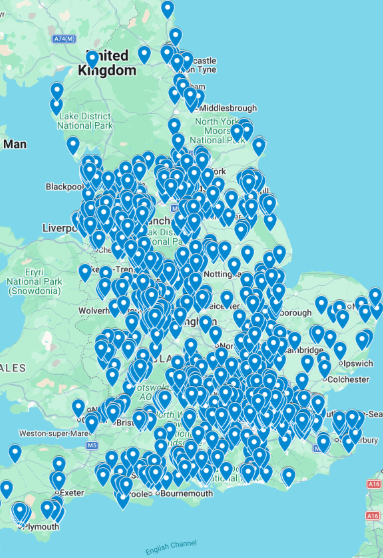
Every pin represents a school or trust currently using OnlineSCR across England and Wales.
OnlineSCR was founded in September 2018 with a single purpose: to make the Single Central Record simple, reliable, and stress-free for every school in the UK.
The problem we set out to solve wasn't complicated. Schools were managing one of their most critical safeguarding documents — the SCR — using spreadsheets, manual processes, and paper records that were time-consuming to maintain and easy to get wrong. When Ofsted arrived, the SCR was one of the first things inspectors checked, and gaps that had gone unnoticed for months suddenly became urgent conversations nobody wanted to have.
We believed there was a better way. A platform purpose-built for schools, simple enough that any member of staff could use it, robust enough to stand up to the most rigorous external audit, and supported by a team that genuinely understands the pressures schools are under.
Since then, thousands of schools, academies and multi-academy trusts across England and Wales have made OnlineSCR part of their safeguarding infrastructure. From small primary schools to large multi-academy trusts, the platform has been trusted in hundreds of Ofsted inspections and external safeguarding audits — and it has never let a school down.
OnlineSCR is a cloud-based Single Central Record system designed specifically for UK schools and multi-academy trusts. It replaces error-prone spreadsheets and manual processes with a clear, structured, always-accessible platform that keeps your KCSIE-required checks organised and audit-ready at all times.
The platform allows schools to manage every pre-employment check required under KCSIE — from DBS checks and QTS verification to prohibition from teaching checks — in one place, with clear visibility of any gaps at both individual school and trust level.
At its core, OnlineSCR does one thing exceptionally well: it makes sure that when Ofsted arrives and asks to see your Single Central Record, everything is there, everything is correct, and your leadership team can walk into that inspection with complete confidence.
OnlineSCR has been built around the real day-to-day needs of school administrators, HR managers, DSLs and SLTs. Here's what's included:
Single Central Record managementA clear, structured SCR that meets KCSIE requirements and is always inspection-ready. Gaps are flagged automatically so nothing gets missed.
DBS check orderingOrder DBS checks directly from within the platform. Results are automatically recorded against the correct staff member in your SCR.
QTS and prohibition checksOrder Qualified Teacher Status and prohibition from teaching checks at the click of a button. Results feed straight into your SCR.
Multi-school and trust visibilityMAT and trust users can view compliance across all schools in one dashboard — identifying gaps at both school and trust level instantly.
Automatic gap identificationThe platform highlights missing or incomplete checks in real time, so you always know exactly where your SCR stands before an inspector arrives.
Audit and Ofsted readyTrusted in hundreds of Ofsted inspections and external safeguarding audits. Designed to meet the scrutiny of the most thorough inspection.
Cloud-based and always accessibleAccess your SCR from any device, anywhere. No software to install, no servers to manage — just a clean, simple platform that works.
Free ongoing trainingAll OnlineSCR customers receive free ongoing training to make sure every member of your team is confident using the platform.
One of the things that genuinely sets OnlineSCR apart from other SCR systems is what happens after you sign up.
Every school that uses OnlineSCR gets free ongoing telephone support for the lifetime of their subscription. No support tickets. No chatbots. No waiting days for an email response. Just a real person on the end of the phone, ready to help.
Whether you have a question about a specific check, need help with a new starter record, or just want to make sure everything is in order before an inspection, our team is there. Pick up the phone and call us on 0151 606 5101.
We also provide free ongoing training for all users. As your team changes, as new staff take over the SCR, or as KCSIE guidance is updated, we'll make sure your team is fully trained and confident in using the platform. No additional cost. No extra charges. It's included as standard because we believe schools deserve proper support — not just software.
Don't take our word for it. Here's what school leaders, HR managers and operations professionals across the UK say about OnlineSCR.
"Having just had the inspectors visit our school in Hertfordshire, I wanted to say how pleased we were to have subscribed to your SCR system last year. The inspectors were very impressed with the clarity and accuracy of the system and commented that it was the best SCR they had seen. This ensured that our inspection got off to a great start and filled our Senior Leadership Team with much confidence for the rest of the inspection. As HR & Operations Manager, I find the system user friendly and with the added support of Matthew and his team I feel very supported in this crucial part of my role."
"Woodfield Academy has been using this platform for several years now, and it has proven invaluable. It provides us with clarity and consistency, while the simple interface makes it easy to identify any missing information at both school and Trust level. It has also stood up to the scrutiny of external safeguarding audits and Ofsted inspections, giving us complete confidence in its effectiveness. A highly recommended tool for any school or Trust looking to strengthen its systems."
Sharon Little — Operations ManagerOak Academies Trust, Leicestershire
"We recently implemented the OnlineSCR system within our school, and we have found it to be extremely beneficial. It is much easier to use than our previous Excel system, and we can now identify missing information with ease, and ensure we remain compliant at all times. We have recently undergone and passed a full compliance inspection of our HR records, and we were able to demonstrate compliance easily using the online tool. They provide unlimited telephone and remote support, and we have found their team to be very helpful and responsive. I can highly recommend this online tool to other schools — I would definitely not be without it."
Susan Allibone — HR Manager
"We use OnlineSCR across our Trust. It gives us clarity, consistency and more importantly, the simple interface identifies gaps for us at both a school and Trust level. It also passed the test with flying colours in a recent external safeguarding audit! Highly recommended!"
Craig Brown — Head of Quality Assurance and School ImprovementThe Royal School, Haslemere
When we built OnlineSCR, we had a simple belief: every school in the country deserves a safeguarding system that actually works — one that's easy to use, genuinely reliable, and backed by a team that picks up the phone.
Over the past six years, that belief hasn't changed. What has changed is the scale of what we do. Thousands of schools now trust OnlineSCR to manage one of the most important documents in their safeguarding framework. That's not something we take lightly.
Every feature we've built, every update we've made, and every call we've answered has been driven by one question: does this make it easier for schools to keep children safe? If the answer is yes, we do it. If it doesn't serve that purpose, we don't.
We're proud of what we've built — but we're prouder of the schools that use it. The DSLs, SBMs, HR managers, operations leads and headteachers who trust us with something this important. We don't take that for granted.
If you're not yet using OnlineSCR and you'd like to see what it can do for your school, call us. We'd love to show you.
Whether you're a new school looking to move away from spreadsheets, a trust wanting visibility across multiple sites, or an existing user who needs support — we're here to help.
Call us on 0151 606 5101 and speak to a member of the team. Alternatively, book a free demo and we'll walk you through the platform at a time that suits you.
See why thousands of schools trust OnlineSCR — book your free demo today.
QTS Checks for Schools: What They Are and Why They Matter
If you're responsible for safer recruitment at your school, you already know that a DBS check is non-negotiable. But there's another check that's equally required under Keeping Children Safe in Education (KCSIE) — and it's one that gets missed far more often.
The QTS check. And unlike a DBS check, it's not confirming criminal history. It's confirming something entirely different: that the person standing in front of your pupils has actually achieved the teaching standards required to do the job.
In this guide, we'll cover exactly what a QTS check is, who needs one, why it's a legal requirement, and how to make sure it's recorded correctly in your Single Central Record.
What Is a QTS Check?
A QTS check verifies whether an individual holds Qualified Teacher Status — the professional qualification required to teach in maintained schools and many other state-funded schools in England.
Qualified Teacher Status is awarded by the Teaching Regulation Agency (TRA), the government body responsible for the regulation of the teaching profession. A QTS check confirms, via the TRA, that the individual has successfully completed an approved teacher training programme and met the required Teachers' Standards.
It's worth being clear about what a QTS check is not:
A DBS check (which covers criminal record history)
A prohibition check (which confirms whether a teacher has been banned from the classroom)
A general employment reference or qualification verification
Each of these is a separate, standalone requirement. A QTS check confirms one specific thing: that the individual is a qualified teacher.
The requirement to verify Qualified Teacher Status comes from Keeping Children Safe in Education (KCSIE), the statutory safeguarding guidance that all schools and colleges in England must follow.
KCSIE sets out the pre-employment checks that must be completed and recorded before a new member of staff begins work. For fully qualified teaching staff, verifying QTS is among those required checks, and the result must be recorded in the school's Single Central Record. The timing of when this check must be in place can vary depending on the individual's situation — for example, a trainee teacher working towards QTS is treated differently to a fully qualified teacher — so schools should refer to the current version of KCSIE for guidance relevant to their specific circumstances.
Failing to complete and record a QTS check is not just an administrative oversight — it's a safeguarding gap. When Ofsted arrives for an inspection, the SCR is typically one of the first documents reviewed. A missing QTS check will be identified, and the conversation that follows won't be straightforward.
A QTS check is required for all teachers employed in:
Local authority maintained schools
Maintained nursery schools
Non-maintained special schools
Academies and free schools
Since September 2012, academies and free schools have been required to employ teachers who hold QTS (or are working towards it). QTS is a mandatory requirement across state-funded schools in England. Schools should refer to the most current version of KCSIE and DfE guidance to confirm requirements for their specific setting, as statutory guidance is updated regularly.
There are some limited exceptions — for example, certain subject specialists or instructors in specific roles may not be required to hold QTS. However, for the vast majority of classroom teachers in state-funded schools, QTS verification is a mandatory pre-employment check.
The Difference Between a QTS Check and a Prohibition Check
This is where many schools run into confusion — and it's important to get right.
A QTS check confirms the individual has achieved Qualified Teacher Status. It answers the question: has this person qualified as a teacher?
A prohibition check (also called a teacher prohibition order check) confirms whether the individual has been prohibited from teaching by the Secretary of State. It answers the question: has this person been banned from the classroom?
Both checks are required under KCSIE. Both must be recorded in the Single Central Record. But they are completely different checks, run separately, confirming entirely different things about the individual.
A DBS check will not show you either of these. Assuming that a clear DBS certificate covers your QTS or prohibition obligations is one of the most common safer recruitment mistakes schools make — and one of the most consequential.
QTS checks are carried out via the Teaching Regulation Agency (TRA). The TRA maintains the database of teachers who hold QTS, and schools can check an individual's status through the TRA's Check a Teacher's Record service.
Searching for the individual using their name and date of birth
Confirming QTS status and recording the outcome
Adding the result to the Single Central Record — for fully qualified teachers this should be in place before the individual begins work
It's also worth noting that a QTS check via the TRA's Check a Teacher's Record service will simultaneously allow you to check for teacher prohibition orders, making it efficient to complete multiple required checks in one place.
With OnlineSCR, QTS and prohibition checks can be ordered directly from within the platform. Results are automatically recorded into your SCR, removing the need for manual data entry and reducing the risk of gaps at the point of inspection.
Recording QTS Checks in Your Single Central Record
Once a QTS check has been completed, the outcome must be recorded in your school's Single Central Record. The SCR is the central log of all pre-employment checks carried out on staff and volunteers, and it's the document Ofsted uses to assess the rigour of a school's safer recruitment process.
The SCR must show, for each applicable member of staff:
That a QTS check was carried out
The date it was completed
The outcome (QTS confirmed, or not confirmed)
The record should be kept up to date and be immediately accessible at the point of inspection. Inspectors expect to be able to cross-reference the SCR against the staff list and confirm that all required checks have been completed for every applicable individual.
A common mistake is completing the check but failing to record it correctly — or recording it in a separate document rather than within the SCR itself. Both will be flagged during an Ofsted inspection.
If a QTS check is missing from the SCR at the time of an Ofsted inspection, the school will need to explain why. In most cases, the explanation is not deliberate non-compliance — it's confusion about which checks are required, or an assumption that another check covered the requirement.
Regardless of the reason, a missing check is a safeguarding concern. Depending on the number of gaps and the wider context of the inspection, it can affect judgements on leadership and management, and on the overall effectiveness of the school's safeguarding arrangements.
The good news is that this is entirely preventable. A robust pre-employment checklist, a well-maintained SCR, and a platform that prompts and records checks at the right time means these gaps simply don't happen.
A newly qualified teacher who has recently completed their training and been awarded QTS will appear on the TRA's records. Their QTS check should still be carried out in the same way as for any other teacher — confirmation of QTS status must be on record before they begin work.
For teachers who trained overseas or hold equivalent qualifications, the requirements differ. Schools employing teachers with overseas qualifications should check the relevant DfE guidance and, where applicable, verify that the individual has been granted QTS by the TRA (as overseas-trained teachers can apply for QTS recognition through the QTS application process).
No. A DBS check confirms criminal record history only. It says nothing about professional qualifications or teaching status. QTS verification must be carried out separately via the TRA's Check a Teacher's Record service.
Do supply teachers need a QTS check?
Yes. If a supply teacher is employed directly by the school, QTS verification is required. If the teacher is employed through an agency, the agency is responsible for carrying out and providing evidence of the check — but the school must obtain written confirmation and record it in the SCR.
How long does a QTS check take?
QTS checks via the TRA are typically quick — results can often be obtained in real time through the Check a Teacher's Record service. With OnlineSCR, the result is automatically logged in your SCR as soon as it's returned.
What if a teacher doesn't hold QTS?
If a candidate does not hold QTS and the role requires it, they cannot be appointed. If the role does not require QTS (for example, an unqualified teacher or instructor role), this should be clearly defined, and the appropriate checks and records for that role type should be followed as per KCSIE guidance.
Do I need to re-check QTS for existing staff?
KCSIE guidance focuses on pre-employment checks, and QTS is awarded permanently once granted — it doesn't expire. However, your SCR should reflect the check that was carried out at the time of appointment. If a record is missing for an existing member of staff, it's advisable to carry out the check retrospectively and update the SCR accordingly.
Managing QTS checks manually — logging into the TRA service, recording outcomes, updating the SCR — takes time and creates opportunities for human error. When you're managing checks for multiple new starters across a busy term, the risk of something being missed increases significantly.
OnlineSCR integrates QTS and prohibition checks directly into the safer recruitment workflow. From within the platform, you can order checks at the click of a button, and results are automatically recorded in the SCR against the correct staff record. No manual entry. No separate spreadsheets. No gaps.
When Ofsted arrives and asks to see your Single Central Record, every check is there — dated, confirmed, and clearly recorded.
See how OnlineSCR helps schools stay compliant and inspection-ready — with QTS checks, prohibition checks, and your entire SCR in one place.
A prohibition from teaching check is one of the most critical pre-employment checks schools must complete — yet it remains one of the most frequently missed, particularly for supply teachers and short-term appointments.
Under Keeping Children Safe in Education (KCSIE), schools are legally required to verify that every member of teaching staff has not been prohibited from teaching before they begin work. Failure to do so is a serious safeguarding failure — and one that Ofsted will identify immediately.
This guide covers everything schools, HR teams, and Multi Academy Trusts need to know about the prohibition from teaching check — and how OnlineSCR streamlines the entire process directly into your Single Central Record.
What Is a Prohibition from Teaching Check?
A prohibition from teaching check — also referred to as a prohibition check — is a pre-employment verification that confirms whether an individual has been prohibited from teaching by the Secretary of State for Education.
The check is carried out through the Teaching Regulation Agency (TRA), which maintains the list of individuals who have been issued with prohibition orders in England.
Planning and preparing lessons and courses for pupils
Delivering lessons to pupils
Assessing the development, progress and attainment of pupils
Reporting on the development, progress and attainment of pupils
This definition is important — it means the prohibition check applies to anyone carrying out these activities, regardless of their job title or contract type.
Unlike a DBS check — which identifies criminal records — a prohibition from teaching check specifically identifies individuals who have been barred from the teaching profession following serious misconduct proceedings. The two checks are entirely separate and both are required under KCSIE.
A prohibition order is one of the most serious sanctions the Teaching Regulation Agency can impose on a teacher. It permanently prevents an individual from carrying out teaching work in:
Schools in England
Sixth form colleges
Relevant youth accommodation
Children's homes
Prohibition orders are issued following professional conduct panel hearings where a teacher has been found guilty of:
Unacceptable professional conduct — behaviour falling significantly short of the standards expected of a teacher
Conduct that may bring the profession into disrepute — actions that damage public confidence in the teaching profession
Conviction of a relevant offence — criminal convictions considered incompatible with continued teaching
In some cases, prohibition orders include a provision that allows the individual to apply for a review after a specified period. In the most serious cases, prohibition is permanent with no right of review.
Schools that employ someone subject to a prohibition order — knowingly or unknowingly — face serious regulatory consequences and potential safeguarding failures.
Under KCSIE, a prohibition from teaching check is required for all individuals carrying out teaching work — regardless of school type, job title, contract length, or employment route. This includes:
Permanently employed qualified teachers
Unqualified teachers
Supply teachers — whether employed directly or via an agency
Trainee teachers on school placements
Teachers returning after a break of 3 months or more
Teachers transferring from another school or MAT
Teachers employed on short-term or temporary contracts
Teachers from overseas working in England
What About Teaching Assistants and Support Staff?
Prohibition checks are not automatically required for teaching assistants and support staff based on job title alone. The determining factor is whether their role meets the definition of teaching work under The Teachers' Disciplinary (England) Regulations 2012 — that is, whether they are planning and preparing lessons, delivering lessons, assessing pupil progress, or reporting on pupil attainment.
If a teaching assistant or support staff member is carrying out activities that fall within this definition, a prohibition check is required regardless of their job title or contract type. For more on which staff require which checks, see our guide on barred list checks for schools.
What About Agency Supply Teachers?
Where a school uses supply teachers provided by an agency, the agency is responsible for carrying out the prohibition check. However, schools must obtain written confirmation from the agency that the check has been completed before the individual begins teaching. This confirmation must be recorded in your Single Central Record.
Prohibition from teaching checks must be completed before an individual begins any teaching work. There are no exceptions to this rule.
Key points on timing:
Pre-appointment — the check must be completed and the result recorded in your SCR before the teacher's first day
Supply teachers — the check must be in place before their first lesson, regardless of how short the engagement is
Transferring staff — a new prohibition check record must be created at the receiving school even if a check was carried out at the previous school
Returning staff — if a member of staff returns after a break of service of 3 months or more, a new prohibition check is required before they resume teaching work
Obtaining the individual's Teacher Reference Number
Searching the TRA's Employer Access Online service
Confirming no prohibition order is in place
Recording the date and result in your Single Central Record
Whilst this process can be completed manually, it requires access to a separate system, manual recording, and relies on individuals remembering to carry it out for every new starter. OnlineSCR provides the facility to carry out this check from within your SCR dashboard — keeping everything in one place and reducing the risk of gaps or missed records.
Under the renewed Education Inspection Framework, both Ofsted and ISI inspectors will specifically look for evidence that prohibition checks have been completed for every member of teaching staff.
Inspectors expect to see:
A prohibition check recorded for every teacher in your SCR
The date the check was completed clearly recorded
Written confirmation from agencies where supply teachers are used
No gaps — even for short-term or temporary teaching staff
Inspectors will not accept verbal assurances that checks have been completed. If it is not in the SCR with a date, it effectively did not happen.
Missing prohibition check records are one of the most common SCR failures identified during Ofsted inspections — and one of the easiest to prevent with the right system in place. Read our full Ofsted safeguarding compliance checklist for everything inspectors look for.
That a prohibition from teaching check was completed
The date the check was carried out
The result of the check
Schools must ensure that these records are:
Complete — every individual carrying out teaching work must have a record
Accurate — dates must be correct and correspond to when the check was actually completed
Consistent — the same format and level of detail must be applied across all records
Auditable — there must be a clear trail showing who completed the check and when
With OnlineSCR, prohibition check results are recorded directly into your SCR the moment they are completed — with the date captured instantly and no manual entry required.
The most common gap we see during SCR audits. Many schools incorrectly assume supply teachers do not require prohibition checks or that the agency has handled it without obtaining written confirmation. Both assumptions are wrong.
2. Confusing Prohibition Checks With DBS Checks
A DBS check and a prohibition from teaching check are entirely separate requirements. Having an enhanced DBS check on record does not satisfy the prohibition check requirement. Both must be recorded independently in your SCR.
3. Applying the Check Based on Job Title Rather Than Role
Whether a prohibition check is required depends on whether the individual is carrying out teaching work as defined under The Teachers' Disciplinary (England) Regulations 2012 — not their job title. A teaching assistant who plans, delivers and assesses lessons requires a prohibition check, regardless of what they are called.
4. Missing Dates on Records
Recording that a prohibition check was completed without a date is treated as an incomplete record during inspection. Always ensure the date is clearly recorded alongside the result.
5. Not Recording Agency Confirmation
Where agency supply teachers are used, schools must record written confirmation from the agency that a prohibition check has been completed. A verbal confirmation is not sufficient.
6. Assuming Checks Transfer Between Schools
Staff transferring between schools — including within the same MAT — require their prohibition check to be recorded at the new school. Do not assume it transfers automatically.
7. Gaps During Busy Periods
Prohibition checks are most commonly missed during busy recruitment periods — September starts, mid-term supply cover, and maternity replacements. These are exactly the moments when a manual process is most likely to fail.
How OnlineSCR Streamlines Prohibition from Teaching Checks
OnlineSCR provides the facility to carry out prohibition checks directly from within your Single Central Record system — removing the need to switch between systems and keeping everything in one place.
Order With One Click
Request a prohibition from teaching check directly from within your OnlineSCR dashboard. The check can be initiated at the click of a button alongside all other pre-employment checks — no need to access external systems separately.
Results Recorded Straight Into Your SCR
Once the prohibition check has been completed, results are recorded directly into your Single Central Record — complete with the date the check was carried out. No manual data entry, no copy and paste between systems, no risk of recording errors.
Real-Time Compliance Dashboard
OnlineSCR's colour-coded compliance dashboard shows the prohibition check status of every member of teaching staff at a glance. Missing or outstanding checks are flagged immediately — so you always know where you stand before an inspector arrives.
Automated Reminders
OnlineSCR's built-in reminder system alerts you to any outstanding checks — including prohibition checks for new starters — so nothing slips through during busy recruitment periods.
Covers All Staff Types
Customise your compliance requirements for each staff category — from permanent teachers to short-term supply staff. OnlineSCR ensures prohibition checks are flagged as required for every applicable individual, regardless of contract type or job title.
For Multi Academy Trusts, managing prohibition checks across multiple schools adds significant complexity:
Different schools may use different processes for completing and recording checks
Staff transferring between schools require checks to be recorded at each site
Trust leaders have no central visibility of compliance status across all schools
Supply teacher checks are inconsistently managed across the trust
OnlineSCR's Trust Overview dashboard gives executive leaders and CEOs instant visibility of prohibition check compliance across every school in the trust. Identify gaps, resolve issues centrally, and ensure consistent standards are applied across all sites — from one screen.
Frequently Asked Questions About Prohibition from Teaching Checks
Is a prohibition check the same as a DBS check?
No. A DBS check identifies criminal records. A prohibition from teaching check identifies whether an individual has been prohibited from teaching by the Secretary of State. Both are separate requirements under KCSIE and both must be recorded in your SCR.
Do supply teachers need a prohibition check?
Yes. All individuals carrying out teaching work — including supply teachers — require a prohibition check regardless of the length of their engagement. Where supply teachers are provided by an agency, schools must obtain written confirmation from the agency that the check has been completed.
Do teaching assistants need a prohibition check?
It depends on their role. If a teaching assistant is carrying out teaching work as defined under The Teachers' Disciplinary (England) Regulations 2012 — planning lessons, delivering lessons, assessing or reporting on pupil progress — a prohibition check is required regardless of their job title.
What happens if a prohibition check reveals an order?
If a prohibition order is identified, the individual must not be employed in any teaching role. Schools should seek immediate advice from their HR provider, local authority, or legal counsel.
How often does a prohibition check need to be repeated?
A prohibition check is a one-off pre-employment check. However, a new check is required if a member of staff returns after a break of service of 3 months or more, if they transfer from another school, or if they have not previously had a prohibition check recorded in your SCR.
Does a prohibition check cover independent schools?
Yes. Prohibition checks are required for teaching staff in all school types, including independent schools inspected by ISI.
Can I carry out a prohibition check manually?
Yes, via the TRA's Employer Access Online service. OnlineSCR provides the facility to carry out this check from within your SCR dashboard — keeping everything in one system and reducing the risk of gaps or missed records.
Final Thoughts: Don't Let a Missing Prohibition Check Fail Your Inspection
A prohibition from teaching check is not optional. It is a statutory requirement under KCSIE for every individual carrying out teaching work — and missing records are treated as missing checks by Ofsted and ISI inspectors.
The most common reason schools have gaps in prohibition check records is not negligence — it is manual processes that cannot keep up with busy recruitment periods, supply cover arrangements, and staff transfers.
With the right system in place, prohibition checks are straightforward to manage and results are recorded directly into your SCR. There is no reason for any school or MAT to have gaps in their prohibition check records.
Adverse media checks for schools are becoming an essential part of safer recruitment in 2026. DBS checks have long been the cornerstone of school vetting — but they cannot give you the full picture. As the safeguarding landscape continues to evolve, more schools and Multi Academy Trusts are now adopting ISM (Internet Social Media) screening as a standard part of their recruitment process — and Ofsted is taking notice.
This guide explains exactly what an adverse media check involves, why your school needs one, and how OnlineSCR makes the process simple, compliant and fully integrated into your Single Central Record.
What Is an Adverse Media Check for Schools?
An adverse media check — referred to in OnlineSCR as an ISM (Internet Social Media) Check — is a structured search of publicly available online information about an individual. It draws from multiple sources to build a comprehensive picture of someone's online presence and reputation, including:
National and local news archives
Court and tribunal records
Regulatory body decisions
Online publications and forums
Social media platforms
Unlike a DBS check — which is limited to criminal record data held by the police — this form of online screening captures a much broader range of reputational risk. A candidate may have no criminal record but still appear in news articles relating to misconduct, financial irregularities, or safeguarding concerns.
Why Schools Need Adverse Media Checks in 2026
What KCSIE Says About Online Searches
Current Keeping Children Safe in Education (KCSIE) guidance makes clear that schools should consider conducting online searches as part of their safer recruitment due diligence. Whilst not a statutory requirement, failure to demonstrate thorough vetting may be questioned during an Ofsted inspection.
KCSIE also requires that shortlisted candidates are informed that online searches may be carried out as part of the recruitment process.
Why DBS Checks Are No Longer Enough
A standard DBS check only reveals criminal convictions, cautions, and barred list information. It does not reveal:
Misconduct that did not result in criminal charges
Regulatory sanctions from professional bodies
Negative media coverage or reputational concerns
Financial misconduct or fraud allegations
An adverse media check fills this critical gap in your safer recruitment process. For a full overview of statutory vetting requirements, see our guide on barred list checks for schools.
Ofsted's Growing Scrutiny of Safer Recruitment
Under the renewed Education Inspection Framework, Ofsted inspectors are placing greater emphasis on how effectively schools implement safer recruitment — not just whether the paperwork exists. Being able to demonstrate a thorough, multi-layered vetting process significantly strengthens your safeguarding evidence base.
Financial misconduct including fraud, bankruptcy, or county court judgements
Reputational concerns including discriminatory or harmful public statements
Safeguarding-related content including concerns raised in public forums
This information allows schools to make more informed recruitment decisions and document their due diligence thoroughly.
When Should Schools Conduct Online Vetting?
Pre-Employment Screening
ISM and adverse media check screening should be conducted as part of the pre-appointment vetting process for:
All teaching and support staff
Volunteers working in regulated activity
Governors and trustees
Contractors with unsupervised access to children
Periodic Reviews for Existing Staff
Some schools are now extending screening beyond recruitment to conduct periodic checks on existing staff — particularly those in senior or sensitive roles. Whilst not yet a statutory requirement, this represents emerging best practice and demonstrates a proactive safeguarding culture.
Legal Considerations and GDPR Compliance
Online reputation screening must be conducted lawfully under the Data Protection Act 2018 and UK GDPR. Key considerations include:
Consent and Transparency
Current KCSIE guidance is clear — candidates must be informed that online searches may form part of your recruitment process. This should be included in your recruitment privacy notice and communicated at the shortlisting stage.
Data Minimisation
Only information relevant to the individual's suitability for the role should be retained. Irrelevant personal information should not be recorded.
Consistency
Screening should be applied consistently to all candidates for a given role to avoid claims of discriminatory treatment under the Equality Act 2010.
How Results Are Recorded in Your SCR
Results are sent directly to the employer for review — they are not stored within the SCR system itself. However, the date the check was carried out is recorded in your Single Central Record. Once the employer has reviewed the findings, they complete the Evidenced By and Date Evidenced fields within OnlineSCR. This creates a clear, auditable record without storing sensitive result data centrally.
Adverse Media Checks vs DBS Checks: What's the Difference?
DBS Check
Adverse Media / ISM Check
Source
Police National Computer
Public online sources
Criminal records
✅ Yes
⚠️ Allegations only
Barred list
✅ Enhanced only
❌ No
Media coverage
❌ No
✅ Yes
Regulatory sanctions
❌ No
✅ Yes
Financial misconduct
❌ No
✅ Yes
Results stored in SCR
✅ Date recorded
⚠️ Date recorded only — results sent to employer
KCSIE referenced
✅ Required
✅ Recommended
The two are complementary, not interchangeable. Best practice is to use both as part of a layered vetting approach. See also our guide on social media safeguarding in schools.
How OnlineSCR Handles Adverse Media Checks for Schools
OnlineSCR makes online reputation screening simple, compliant, and fully integrated into your Single Central Record workflow.
Order With One Click
Request ISM checks directly from within your OnlineSCR dashboard — no separate systems or manual processes required. Once ordered, the check is immediately logged with the issue date.
Results Sent Directly to the Employer
Findings are returned to the employer for review. The employer then:
Reviews the results
Completes the Evidenced By field — recording who reviewed the check
Enters the Date Evidenced — confirming when it was reviewed
Full Audit Trail for Ofsted Inspection
Every check is date-stamped within your SCR. The Evidenced By and Date Evidenced fields provide inspectors with clear confirmation that vetting has been ordered, received, and reviewed.
MAT-Wide Visibility
For Multi Academy Trusts, OnlineSCR provides central visibility of screening status across all schools — so nothing slips through the cracks.
How to Interpret Online Vetting Results
Not every finding requires the same response. When reviewing results, consider:
Relevance — Is the information relevant to the individual's suitability to work with children?
Recency — How recent is the information? Has time passed and circumstances changed?
Severity — Does it suggest a risk to children or to your school's reputation?
Context — Is there additional context that changes the significance of the finding?
What to Do If Negative Information Is Found
Do not dismiss the application automatically — consider the information in context
Give the candidate an opportunity to respond — allow them to provide context at interview
Seek advice — from your HR provider, local authority, or legal counsel if necessary
Document your decision — record what was found, what was considered, and the outcome
Complete your SCR — ensure the Evidenced By and Date Evidenced fields are updated in OnlineSCR
Best Practices for Adverse Media Screening in Schools
Include online reputation screening in your recruitment policy — make it a documented, consistent process
Inform candidates at shortlisting stage — as required by current KCSIE guidance
Train your safer recruitment panel — ensure they understand how to interpret findings
Complete Evidenced By and Date Evidenced fields promptly — don't leave these outstanding
Review your process annually — keep pace with evolving KCSIE guidance
Use a specialist provider — manual Google searches are inconsistent and difficult to defend at inspection
Frequently Asked Questions About Adverse Media Checks for Schools
Are adverse media checks a legal requirement for schools?
Not a statutory requirement, but current KCSIE guidance states schools should consider carrying out online searches as part of safer recruitment due diligence. Failure to demonstrate thorough vetting may be questioned at inspection.
Do these checks replace DBS checks?
No. They are complementary. DBS checks remain a statutory requirement. Online reputation screening provides an additional layer of vetting that DBS checks cannot cover.
Are results stored in the SCR?
No — results are sent directly to the employer for review. The date of the check is recorded in the SCR, and the employer completes the Evidenced By and Date Evidenced fields to confirm they have reviewed the findings.
Can we conduct our own online searches instead?
Technically yes, but manual searches are inconsistent, undocumented and difficult to defend at inspection. A structured check through OnlineSCR ensures consistency, compliance and a proper audit trail.
Do we need to tell candidates we are conducting an online search?
Yes. Current KCSIE guidance is clear — schools must inform shortlisted candidates that online searches may be carried out as part of due diligence checks.
Final Thoughts: Modern Safeguarding Requires Modern Vetting
The safeguarding landscape in 2026 is more complex than ever. A DBS check alone cannot give schools the full picture they need to make safe recruitment decisions. Adverse media checks are not about distrust — they are about due diligence and being able to demonstrate to inspectors, governors, and parents that your school takes safer recruitment seriously.
The strongest schools are not waiting. By adopting an adverse media check as part of layered vetting, they are building a proactive safeguarding culture that stands up to inspection.
Ensure Your School Is Always Safer Recruitment Ready
OnlineSCR provides:
One-click ISM and online reputation screening
Clear audit trail with Evidenced By and Date Evidenced recording
Full SCR compliance for Ofsted and ISI
MAT-wide compliance visibility
Integrated DBS, QTS, Prohibition and Section 128 checks
Barred List Check for Schools: Essential Guide for School Safeguarding
Barred list check for schools is a critical safeguarding requirement. Safeguarding is the foundation of a safe school environment. One of the most critical checks schools must carry out when recruiting staff or volunteers is the barred list check. This process ensures individuals who are legally prohibited from working with children or vulnerable adults are not employed in regulated roles within schools.
For school leaders, HR teams, and safeguarding officers, understanding barred list requirements is essential for maintaining compliance with safeguarding legislation and inspection standards.
A barred list check for schools helps education settings confirm that people working in regulated activity with children are legally permitted to do so.
In this guide, we explain what barred list checks are, who must be checked, when they are required, and how schools can manage them efficiently using OnlineSCR.
What Is the Barred List Check for Schools?
The barred list is a safeguarding register maintained by the Disclosure and Barring Service (DBS). It contains the names of individuals who are legally banned from working with children or vulnerable adults due to past harmful behaviour or serious safeguarding concerns.
Schools must ensure that anyone working in regulated activity with children is not included on the Children's Barred List before employment begins.
A barred list check is therefore one of the most important safeguarding controls in the recruitment process.
Failure to carry out this check could allow a prohibited individual to work with children — posing a serious safeguarding risk.
This list includes individuals banned from working with anyone under the age of 18. Schools must check this list for anyone who will work in regulated activity with children.
Typical roles requiring this check include:
Teachers
Teaching assistants
Learning support staff
Pastoral staff
Volunteers working regularly with pupils
School sports coaches
Adults' Barred List
This list contains individuals barred from working with vulnerable adults in settings such as care homes, healthcare, and support services.
Most schools primarily need to check the Children's Barred List, although special schools or settings supporting vulnerable adults may require both.
When Are Schools Legally Required to Conduct a Barred List Check?
Schools must carry out a barred list check before a person starts working in regulated activity with children.
According to guidance from the UK Government and statutory safeguarding framework Keeping Children Safe in Education (KCSIE), a barred list check must be completed as part of an Enhanced DBS check with barred list information.
Schools may also conduct a standalone barred list check in certain circumstances, such as when a new staff member needs to begin supervised work before the full DBS certificate is returned.
This ensures safeguarding checks are not delayed while the full DBS process is completed.
How Often Should Schools Conduct Barred List Checks?
A barred list check is mandatory during recruitment before an individual begins regulated activity.
After this point, schools are not legally required to repeat the check regularly. However, many institutions adopt additional safeguarding measures such as:
DBS Update Service monitoring
Risk-based rechecking policies
Ongoing safeguarding supervision
Maintaining clear records of these checks is essential for safeguarding compliance.
Barred list checks are a vital component of school safeguarding, but managing them manually can create risk and administrative burden.
OnlineSCR provides a secure, streamlined system for managing Single Central Records and safeguarding checks — helping schools maintain full compliance with statutory guidance.
With automated alerts, inspection-ready reporting, and clear compliance tracking, schools can focus on what matters most: protecting pupils and maintaining a safe learning environment.
Ofsted safeguarding is a limiting judgement under the Education Inspection Framework. If safeguarding is ineffective, your overall judgement is likely to be affected — regardless of strengths elsewhere.
This guide explains exactly what Ofsted inspectors look for, the latest safeguarding expectations for 2026, and how to ensure your school or MAT is inspection-ready at all times.
Safeguarding is not a standalone judgement — it underpins Leadership & Management, Behaviour & Attitudes, and Personal Development.
If safeguarding is ineffective, leadership will almost always be judged ineffective.
What Ofsted Inspectors Look for During Safeguarding Audits
Inspectors do not just “check paperwork”. They test whether safeguarding is:
Effective
Embedded in culture
Understood by staff
Properly recorded
Acted upon
Here are the key areas they focus on:
1. Single Central Record (SCR) Compliance
The Single Central Record is one of the first documents inspectors request. For detailed guidance on this critical area, see our post Single Central Record (SCR) compliance.
Core safeguarding duties remain rooted in KCSIE and have not fundamentally changed. However, under the updated framework from Ofsted, inspection conversations are increasingly focused on how effectively safeguarding is implemented in practice.
Key areas of continued scrutiny include:
Digital safeguarding – the effectiveness of filtering and monitoring systems, staff understanding of online harms, and response to cyberbullying.
Record transparency – clear audit trails, timely follow-up of concerns, and evidence of action taken.
Leadership accountability – visible governor/trustee oversight and appropriate challenge around safeguarding arrangements.
For Multi-Academy Trusts, inspectors may explore how trustees and executive leaders maintain central visibility of safeguarding compliance across schools.
The emphasis is less on policy documentation alone, and more on demonstrable impact, oversight, and safeguarding culture.
The Ultimate Ofsted Safeguarding Checklist (2026)
Use this as a pre-inspection audit tool:
Single Central Record
All required checks recorded
Dates clearly entered
Barred list checks included (where required)
Section 128 checks recorded (where required)
Consistent formatting across schools
Recruitment
Safer recruitment trained panel member
References obtained before appointment
Identity verified
Risk assessments documented (if applicable)
Training
Annual safeguarding training completed
KCSIE confirmation logged
DSL advanced training up to date
Governors trained
Policy & Culture
Safeguarding policy updated annually
Staff know reporting procedures
Online safety measures reviewed
Concerns logged and reviewed systematically
Common Safeguarding Failures That Lead to Ofsted Criticism
Incomplete SCR entries
Inconsistent processes between academies in a MAT
Delays in recording safeguarding concerns
No evidence of governor oversight
Over-reliance on spreadsheets with no audit trail
Missing barred list checks for regulated activity
Most safeguarding failures are not intentional — they are caused by manual systems and lack of oversight.
How to Be “Inspection Ready” 24/7
Waiting until inspection notification is too late.
Audit their SCR termly
Use digital tracking systems
Conduct mock safeguarding audits
Centralise compliance visibility across sites
Automate alerts for missing checks
Inspection readiness should be constant — not reactive.
How OnlineSCR Supports Ofsted Safeguarding Compliance
OnlineSCR is designed to remove manual safeguarding risks and ensure schools remain inspection ready.
Key benefits include:
Automated Flagging
Instant alerts for:
Missing DBS checks
Missing barred list checks
Expired training
Incomplete Section 128 checks
MAT-Level Oversight
Trust leaders can:
View compliance across all academies
Identify risk areas instantly
Prepare for inspection centrally
Real-Time Compliance Dashboard
Safeguarding leads can see gaps immediately — not weeks later.
Frequently Asked Questions About Ofsted Safeguarding
Is safeguarding a limiting judgement?
Yes. If safeguarding is ineffective, leadership is usually judged ineffective.
Does Ofsted check the Single Central Record?
Yes. It is typically requested early in inspection.
How often should we audit our SCR?
At least termly, but best practice is ongoing review.
What happens if one check is missing?
Inspectors will consider severity, but repeated or systemic gaps raise serious concerns.
Final Thoughts: Safeguarding Is Leadership
Ofsted safeguarding is not about ticking boxes.
It is about:
Systems
Culture
Accountability
Evidence
The strongest schools treat safeguarding as a leadership priority — not an administrative task.
If your safeguarding processes rely on spreadsheets, manual reminders, or disconnected systems, inspection risk increases.
Modern safeguarding requires modern oversight.
Want to Ensure Your School Is Always Inspection Ready?